Walk the asset.
Understand the property first.
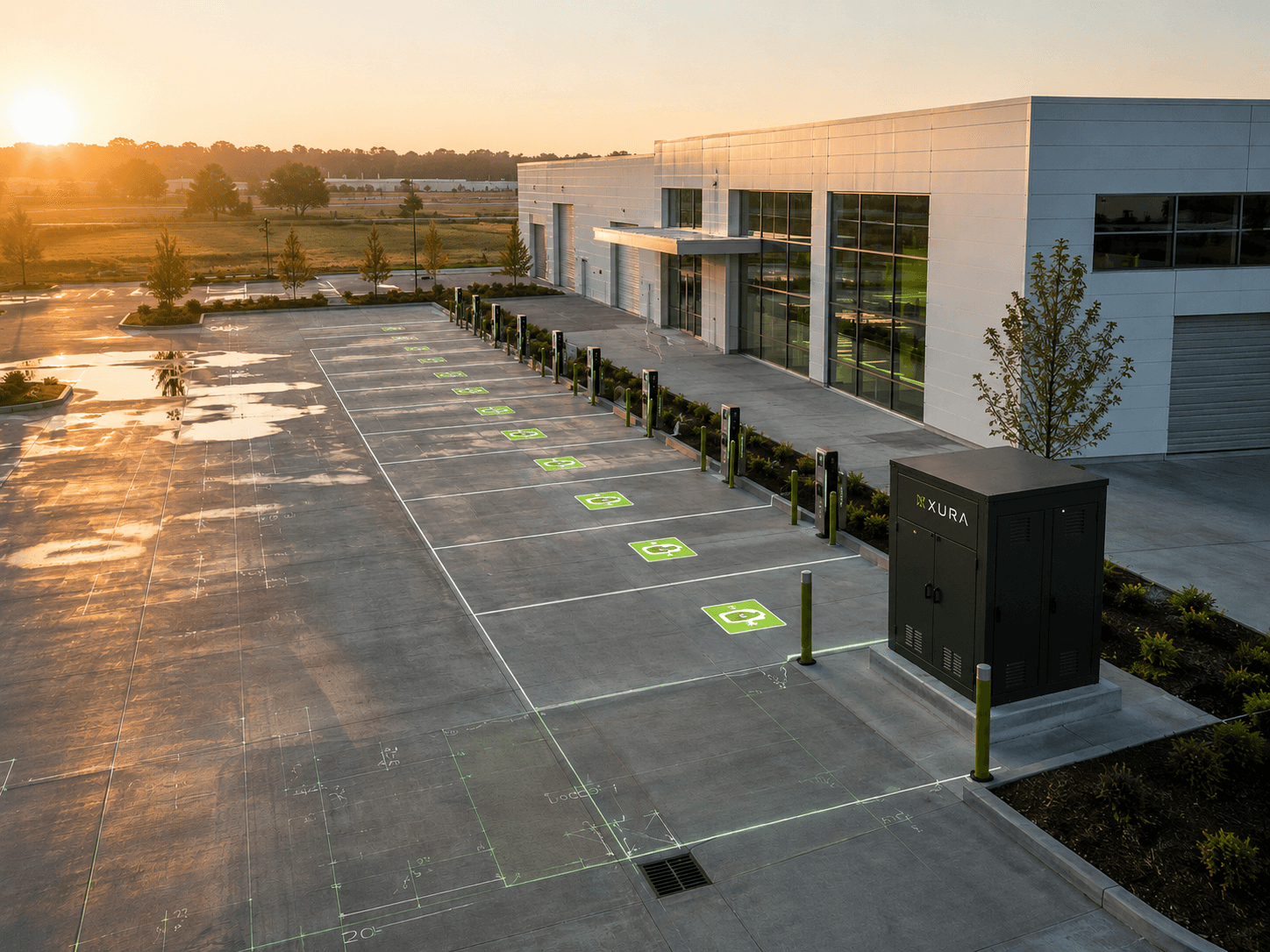
We evaluate the physical site, existing electrical infrastructure, and how the property operates day to day—before a single drawing is produced.
- Physical
- Site
- Existing
- Electrical
- Day-to-day
- Operations

Site-Level Energy Infrastructure
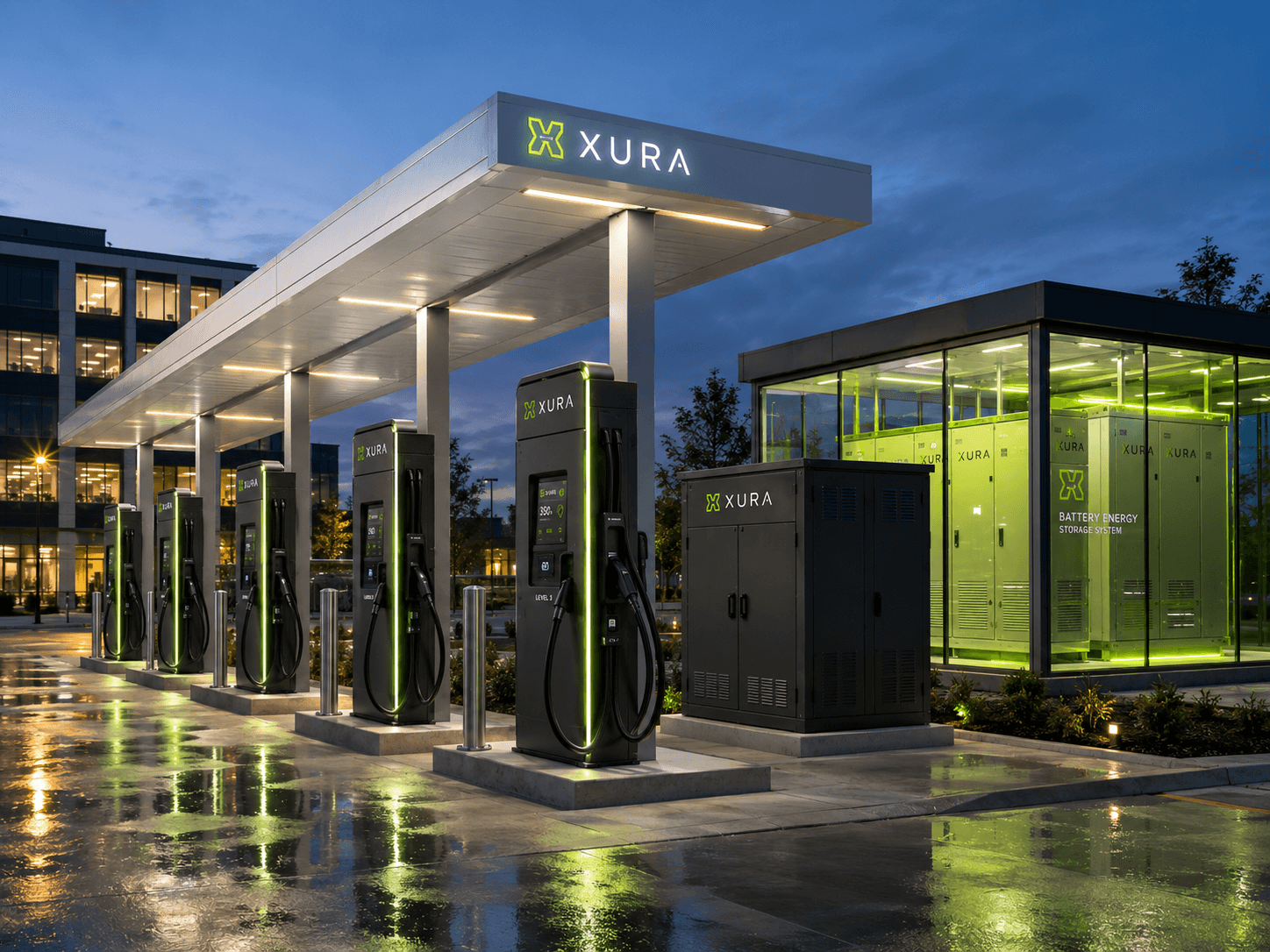
Xura designs and delivers Level 3 EV charging and battery energy storage for commercial and fleet facilities—engineered around real site conditions, not theoretical grid availability.Level 3 EV charging and battery storage—engineered around real site conditions.
The Constraint
Utilities can’t expand fast enough for electrification load. We design around what the meter delivers today.
Solutions
Every Xura deployment starts with the same constraint — you have a site, the utility doesn’t have time. We engineer around it.
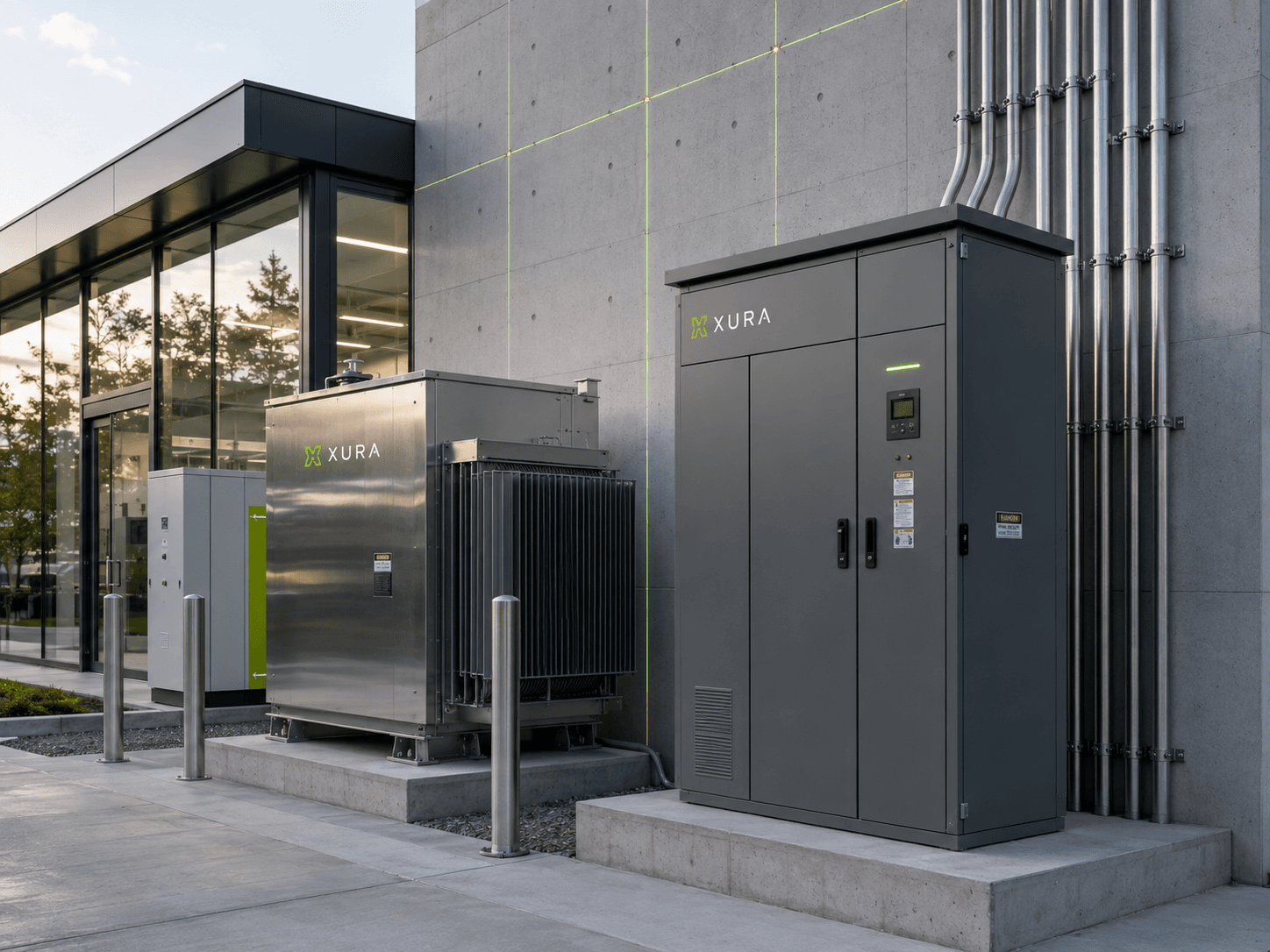
UL 9540A-tested systems with onboard BMS, NFPA 855 siting, and 24/7 telemetry.
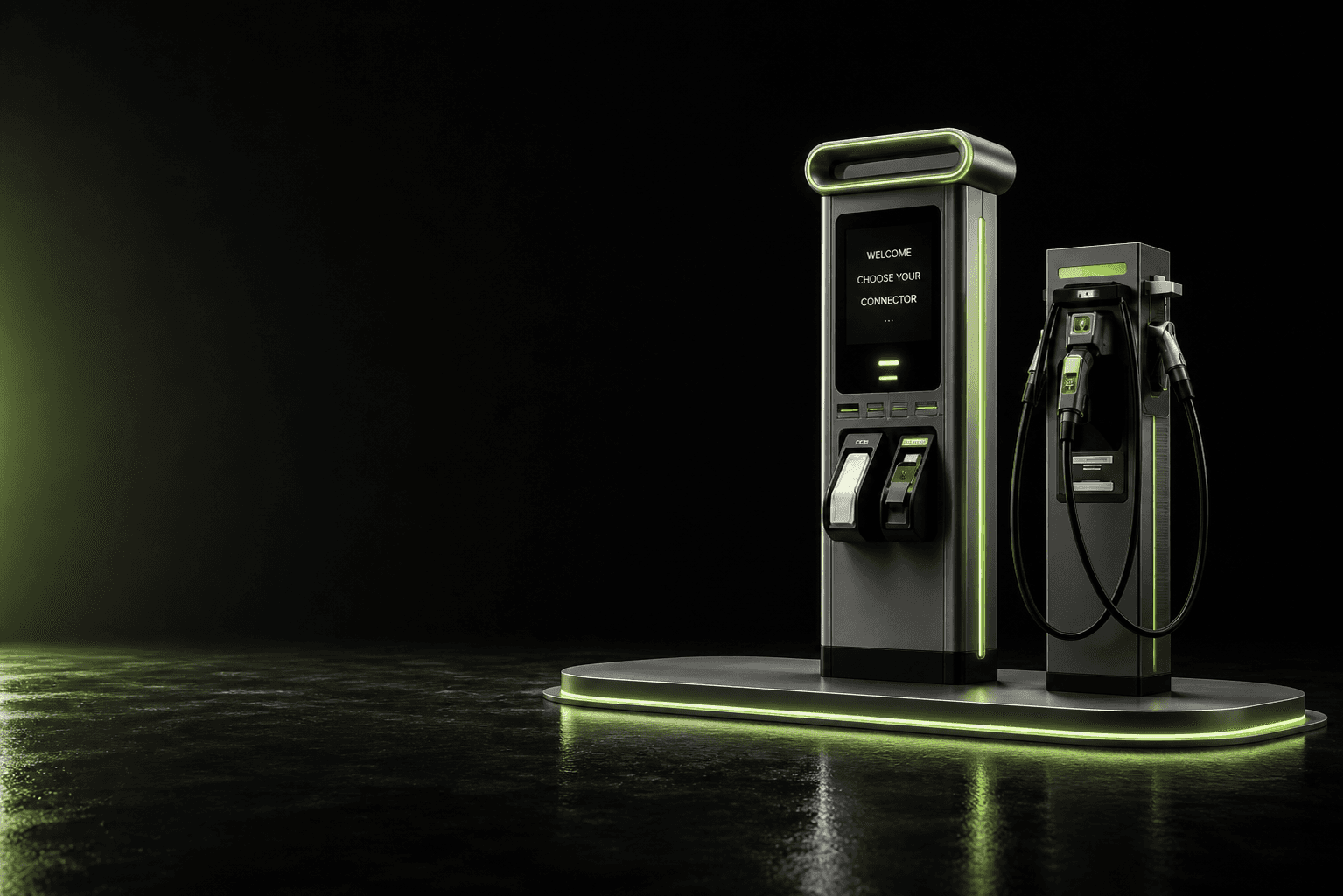
Level 3 DC fast charging, staged with on-site storage when your service can’t carry the load alone.
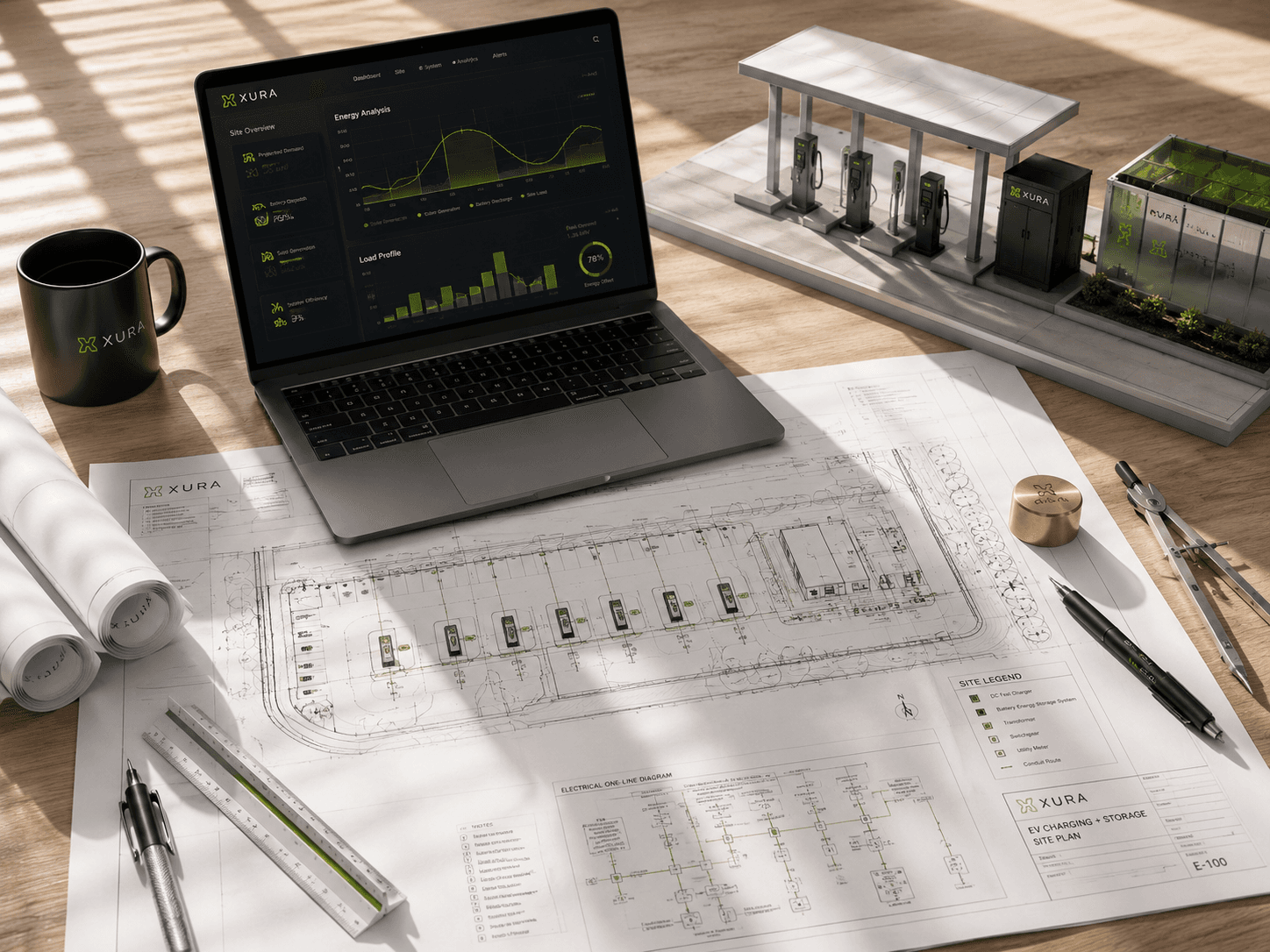
Storage, charging, and grid interaction coordinated under your service ceiling — automatically.
Approach
Fleet electrification exposes grid, load, and scheduling constraints early. Every site walks the same disciplined arc—and each step compounds on the last.
Walk the asset.
We evaluate the physical site, existing electrical infrastructure, and how the property operates day to day—before a single drawing is produced.

Test the utility.
Grid capacity, interconnection requirements, and permitting considerations are assessed early—establishing realistic boundaries, not theoretical ones.

Engineer to constraints.
Charging and storage are designed around site conditions, usage patterns, and long-term performance—never around assumptions or stock configurations.

Operate the asset.
Projects move forward with clear scope, coordinated approvals, and systems designed to be built, permitted, and operated reliably—long after commissioning.

Walk the asset.
We evaluate the physical site, existing electrical infrastructure, and how the property operates day to day—before a single drawing is produced.

Test the utility.
Grid capacity, interconnection requirements, and permitting considerations are assessed early—establishing realistic boundaries, not theoretical ones.

Engineer to constraints.
Charging and storage are designed around site conditions, usage patterns, and long-term performance—never around assumptions or stock configurations.

Operate the asset.
Projects move forward with clear scope, coordinated approvals, and systems designed to be built, permitted, and operated reliably—long after commissioning.

Strategy
Built around a simple constraint—the grid can’t expand fast enough to meet near-term electrification demand. Four principles keep delivery honest.
Storage, charging, and load control are designed to operate as a single, coordinated system — never as standalone parts bolted together.
Only sites with validated electrical capacity, interconnection, and constructability move forward. Feasibility is the first gate, not the last check.
Xura stays directly involved from design through operations. The team that scopes the site is the team that commissions and runs it.
Assets are engineered for durability, actively monitored, and optimized over time — built to perform in line with their design assumptions long after commissioning.
FAQ
Real questions from real conversations with property owners, fleet operators, and capital partners.
Battery energy storage systems (BESS) store electricity on-site and discharge it when needed to support operations, manage demand, or supplement limited grid capacity. In commercial and fleet environments, storage is often used to enable electrification where utility power alone is insufficient.
Contact
Every site presents different constraints. A site review provides the clarity needed to evaluate feasibility and define a realistic path forward—before design or capital decisions are made.